More Revenue, Fewer Clients
To grow revenue, there are only two basic options: get more clients, or sell more services to existing clients. The dream for every tax and accounting practice is the second: more revenue with fewer clients. Revenue pays the firm well, hires experienced staff, affords the best technology. Pair that with fewer clients and the firm reaches the management paradise of less stress, less liability, fewer staff to manage, and more time for work the team enjoys.
The problem is that most firms have been taught to focus on the wrong type of growth: Client Roster Size. Growth by adding more clients. The more efficient option is to grow Average Contract Size for each engagement. Enrolling ten $3,500/year clients takes the same effort as ten $350/year clients, but produces $35,000 vs $3,500. It’s basic math.
Why Average Contract Size Stays Low
Most firm owners don’t have a mechanism to educate clients about the difference between higher-level planning and simple tax prep, why one would be better for them than the other, or when each fits. Most clients don’t know there are things the firm could be doing for them, but isn’t, because they aren’t paying for it. The only way for them to know is if someone educates them.
- The firm stops feeling like it has to “sell” anyone.
- Time goes into educating prospects about options, not pitching.
- Clients pick the level of service they want themselves.
- Higher-revenue engagements onboard without selling.
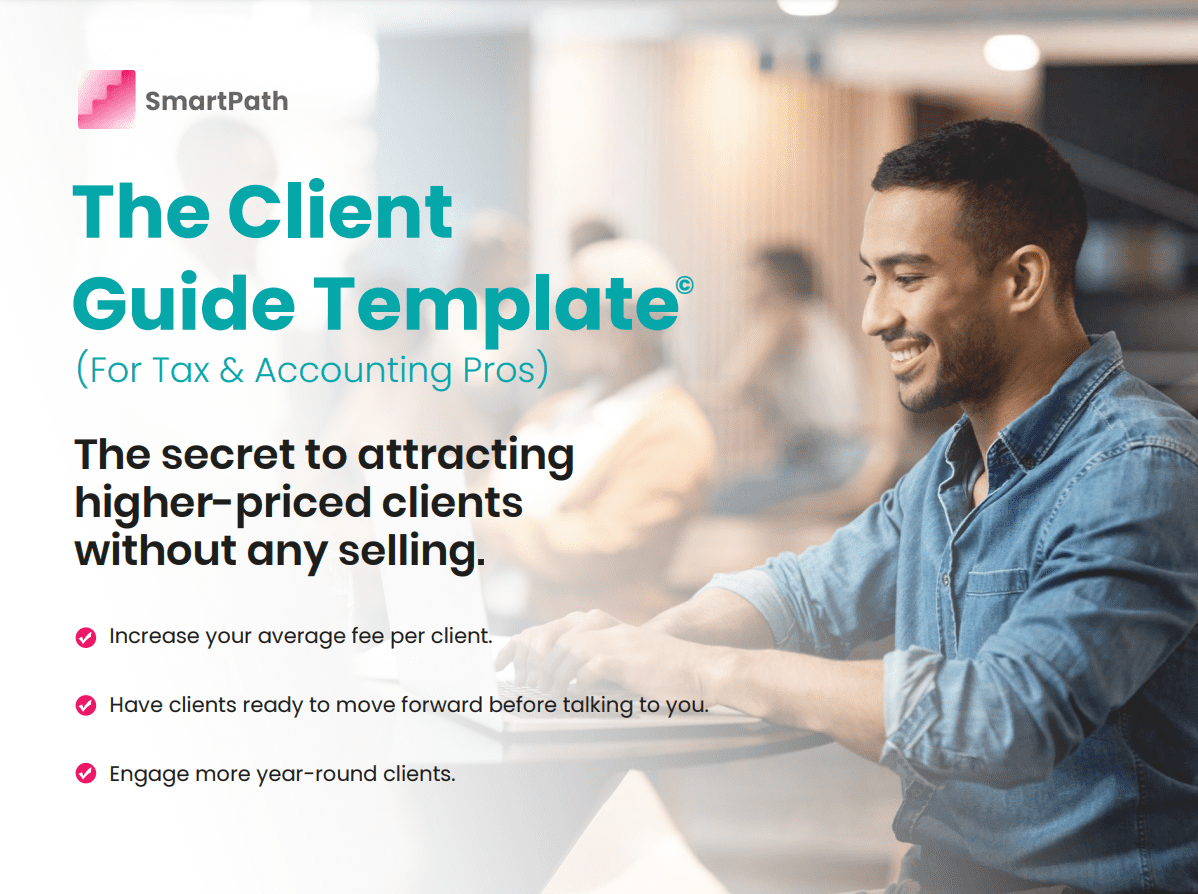
The mechanism is a Client Guide: a page on the firm’s site, a recorded video, or a simple PDF. The format matters less than the content and structure.
6 Elements of the Client Guide Template
Service levels
What can clients choose from?
Which is best
How can they tell?
When to choose
Best times of year.
Why this firm
Unique value vs. others.
Price ranges
Transparent starting fees.
Next steps
How to get started.
What Levels of Service Can Clients Choose From
The most powerful thing a firm can do is make it easy to choose to work with it. That happens by creating contrast. When people have too many options, they become overwhelmed and don’t choose anything (analysis paralysis). The key to standing out is high contrast between two clear options.
At the highest level, two options work best:
- Level 1. Help reporting taxes and/or reporting transactions in accounting.
- Level 2. Reporting + strategic planning to decrease taxes and/or analyze the books.
Example wording: “We now have two options for working together. Our Easy-Reporting option helps you quickly and easily meet your filing requirements so you can have more time to do the things you enjoy. Our Year-Round Planning + Reporting option combines all your traditional filings with our strategic planning process so you can pay the least amount of tax possible and have the best cash flow in your business.“
How Can They Tell Which Option Is Best
Help the client self-qualify by laying out the specifics that matter: income level, W-2 vs. self-employment, investments or real estate, and whether they want help making progress on goals. Make it easy for a prospect to see whether they could benefit from proactive planning, or whether they just need someone to report what already happened.
Example wording: “Our Easy-Reporting option is perfect for clients who earn most of their income from a W-2 job, don’t have significant real estate or investments, and aren’t at a stage where you want an advocate to help plan for the future. Our Year-Round Planning + Reporting option is perfect for anyone who is self-employed, has multiple streams of income, has real estate or investments, and wants to pay the absolute least amount of tax possible through proactive planning.“
The Best Times of Year to Choose an Option
This section motivates action and focuses attention. Clients always want to know if there are advantages or disadvantages to signing up at a particular time. Be direct and honest about availability. If the firm only accepts new clients Sept-February, say so.
Example wording: “We only have so many Year-Round Planning spots available, so please let us know as soon as possible if you’re interested. Once you upgrade, you won’t have a yearly bill anymore; you’ll invest a simple monthly fee to cover our work. There may be setup or cleanup costs to qualify for the planning process, and we’ll discuss those before enrollment.“
Why Should They Work With This Firm
If the answer is “World-Class Customer Service” or “XX Years Experience,” the firm is saying exactly what every other firm says and clients won’t care. The right answer:
- Highlight what’s happening in the ideal client’s world that impacts their life or business.
- Outline the firm’s specific process for helping them reach their goals despite those challenges.
Example wording: “The world around us is changing and the speed of change will only increase. Many firms don’t offer proactive planning. We’ve updated our approach to work proactively to lower taxes, increase your cash flow, and neutralize threats before they impact you. By selecting one of our options, we can focus on the value most important to you and align our work with a process that benefits us both.“
The Starting Price Ranges
No need to get to the penny in the Client Guide. A fee range is required for the guide to be effective. A range repels clients the firm doesn’t want and attracts ideal clients by showing transparency.
Example wording: “Reporting-only averages $300-$1,000/year for individuals without a business. For business owners, $700-$3,000+ depending on complexity. Year-Round Planning averages $59-$199+/month for individuals and $199-$999+/month for businesses. Your exact investment could be more based on complexity, number of services, and planning agreed to.“
The Logistical Next Steps
Nobody likes walking into a dark room. Clients want to know what to expect next. Clarity makes them comfortable continuing forward.
- Contact the firm; the firm reviews the specific situation and verifies the best option.
- Discuss pricing and agree on an engagement matched to goals.
- Enroll, and get started with pain-free reporting or kick off the planning process.
Common Questions About the Client Guide
What format works best for a Client Guide?
A PDF, a web page, or a short recorded video all work. PDFs are easiest to email; web pages are easiest to update and share. The format matters less than answering the six elements clearly.
Why only two service options?
High contrast makes the choice easy. Three or more options dilute the contrast and trigger analysis paralysis. Two options frame the decision around fit, not price.
Should the firm publish exact prices in the Guide?
No. A starting range is enough. The exact price depends on the client’s complexity, scope, and chosen services. Ranges attract the right clients and filter out the wrong ones.
How does this guide actually help raise average contract size?
It does the educating before the call. By the time a prospect is talking to the firm, they’ve already seen the contrast between reporting-only and year-round planning, understand the pricing range, and have self-selected into the option that fits their situation. Many self-select into the higher tier.